To freeze - or not to freeze? Foods that freeze well & those that don't
Posted by RitaHeikenfeld at 9/7/2009 12:55 PM EDT on Cincinnati.com
Here's the deal:
Foods that freeze well:
Red meat - 4-12 months
Poultry - 9 to 12 months
Seafood - 3 to 6 months
Raw bacon - 1 to 2 months
Some casseroles - 1 to 4 months
Soups, stews & stocks - 2 to 4 months
Cooked legumes 4-6 months
Whole berries - 8 to 12 months
Peeled ripe bananas - 2 to 4 weeks
Blanched veggies - 2 to 12 months, depending on the veggie
Bread - 6 to 8 months (wrap well!)
Pie dough - 6 to 8 weeks
Nuts - 6 to 12 months
Butter - 6 to 9 months
Egg whites - 12 months
Flour (like whole grains, all purpose, etc.) - 6 to 12 months (check whole grains after 6 months)
Foods that don't freeze well:
High moisture veggies like lettuce, celery & cabbage get watery.
Cream and custard fillings separate.
Meringue toughens.
Milk undergoes flavor changes
Sour cream and yogurt separate (i've had luck whisking them a bit before using)
Heavy cream usually won't whip after it's been frozen, but it's OK to use.
Tuesday, September 15, 2009

Thursday, September 10, 2009
VEGETABLE LASAGNE (Page 60)

They say you eat with your eyes first!

I line up my veggies in order of cook time.

I had my lagest skillet and still made a mess.

Love these noodles!

Adding pesto to the veggies

Making the bechamel sauce, thickening

Adding the nutmeg

Chopping basil in a "chiffonade"

Ricotta cheese mixture ingredients

Layering the lasagna


The finished produce with a fluffy top ~ Yum.
VEGETABLE LASAGNE
olive oil salt pepper to taste
2 c. onions chopped nutmeg to taste (for bechamel sauce)
4 cloves garlic, minced 1 1/2 lbs. whole milk ricotta
3 zucchini, diced 8 oz. frozen spinach, thawed and squeezed dry
2 red bell peppers, diced
1 cup shredded carrots optional
6 oz. mushrooms, sliced 2 T. fresh basil, chopped
4 Roma tomatoes, diced 2 1/2 c. mozzarella, divided
1/2 c. pesto, home made or prepared 1 1/2 c. Parmesan, divided
3 T. unsalted butter 3 eggs
2 T. flour 1 box of Barilla no bake lasagne noodles,divided in thirds
2 c. whole milk
In a large skillet, heat olive oil over medium heat. Add onions and cook until soft, add carrots and cook a few minutes more. Then add zucchini, peppers and garlic and cook. Add tomatoes, salt and pepper to taste. Place all veggies in a large bowl, set aside. Heat more olive oil and cook mushrooms. Add cooked mushrooms to vegetable mixand stir in 1/2 cup pesto sauce and coat well. Set aside. Bechamel Sauce: In a heavy saucepan, melt butter. Remove from heat. Whisk in flour. Return to heat and cook flour 1-2 minutes, don't let it brown. Remove from heat and whisk in milk. Return to heat and whisk until thick. Season with salt, pepper and nutmeg (to taste). Set aside.
Ricotta mix: Combine ricotta, spinach, basil, 1/2 c. mozzarella, eggs,and 1 cup Parmesan. Season to taste with salt and pepper. Grease a 9 x 13 and preheat oven to 375 degrees. Take 1/3 of the bechamel sauce and place in the bottom of the pan. Lay 1/3 the noodles over the sauce. Layer 1/2 of the vegetables next and then the ricotta mixture. Spreading evenly as you go. Place 1 cup of mozzarella over next. Lay another 1/3 of the noodles. Repeat bechamel sauce layer, vegetable layer and then the
last 1/3 of the noodles. Spread the ricotta over noodles and cover with all of the remaining cheeses. Bake 45 minutes until nicely browned.
Note: You can find the home made pesto recipe in the "This and That" section of this
book. Don't be afraid to season each layer. Careful on the nutmeg, as it can over
power the dish.
Saturday, August 29, 2009
Some Photos of Pesto Chicken


Here is what you do after you've made pesto: you add lemon juice, marinate a few hours and grill.
Thursday, May 21, 2009
Pesto and Pesto Chicken (Pg. 39)
Pesto and Chicken with Pesto:
2 c. firmly packed basil leaves 1/2 c. olive oil
1-2 cloves of garlic 1/4 to 1/2 c. Parmesan cheese(the good stuff)
3 T. Pine nuts salt and pepper to taste
If making Pesto chicken add 3-4 T. lemon juice and 2 lbs thawed boneless skinless chicken breast.
Season chicken with salt and pepper place in a gallon size freezer bag or 9 x 13 dish. Cover and refrigerate. Wash up!
Pesto sauce:
In a food processor place garlic and pulse, then the basil and pulse.


Add the pine nuts and pulse.

Slowly add olive oil while processing, then pulse in the cheese.


You can pour into a small Ball Mason jar, cover the top with olive oil and freeze. You can use right away on bruschetta or in a pasta dish.

If making pesto chicken, add lemon juice to the mixture and mix well. Pour over the chicken and marinate for 30 min. to a few hours (refrigerate), but NOT over night. I like a freezer bag to flip the mixture.

Grill chicken, turning only once until cooked, but not until dry! Place on a platter and cover with foil so juices redistribute. Can be served over pasta or a bed of greens. Yum!
2 c. firmly packed basil leaves 1/2 c. olive oil
1-2 cloves of garlic 1/4 to 1/2 c. Parmesan cheese(the good stuff)
3 T. Pine nuts salt and pepper to taste
If making Pesto chicken add 3-4 T. lemon juice and 2 lbs thawed boneless skinless chicken breast.
Season chicken with salt and pepper place in a gallon size freezer bag or 9 x 13 dish. Cover and refrigerate. Wash up!
Pesto sauce:
In a food processor place garlic and pulse, then the basil and pulse.


Add the pine nuts and pulse.

Slowly add olive oil while processing, then pulse in the cheese.


You can pour into a small Ball Mason jar, cover the top with olive oil and freeze. You can use right away on bruschetta or in a pasta dish.

If making pesto chicken, add lemon juice to the mixture and mix well. Pour over the chicken and marinate for 30 min. to a few hours (refrigerate), but NOT over night. I like a freezer bag to flip the mixture.

Grill chicken, turning only once until cooked, but not until dry! Place on a platter and cover with foil so juices redistribute. Can be served over pasta or a bed of greens. Yum!
Monday, May 4, 2009
Chicken Pot Pie (Page 39)
4 cups chicken cooked and diced
1 cup onion,chopped
1 cup carrot, chopped
1 cup celery, chopped
1/2 cup + 2 T. unsalted butter
1 cup frozen peas
1 cup onion,chopped
1 cup carrot, chopped
1 cup celery, chopped
1/2 cup + 2 T. unsalted butter
1 cup frozen peas
1 T. half and half
1/4 cup plus 2 T. flour, not divided
2 cups chicken broth
1 cup half and half + 1Tbsp., divided
Take 3-4 uncooked chicken breasts and cover 1/2 way with water or broth and bake at 350 degrees until done. Dice into small pieces to 4 cups and set aside. Chop veggies as into small bits. Set up ingredients so that when the ingredients are gone, you are done. This is called "mise en place".

Melt the butter in a large saute pan (this is a 4 quart pan.) And saute the veggies.

You will be sauteing the veggies at least 10 min. over medium heat. Really make sure the veggies are soft. This is their only real "cook" time. As you are waiting for the veggies to soften, line up your next ingredients. Once you have softened veggies add flour and peas. Stir and cook for 1 minute.
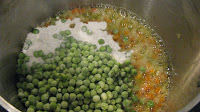
Gradually add broth and cream. Cook over medium heat, stirring constantly, until thick and bubbly. Stir in salt and pepper. Add chicken and stir. Ladle mixture into an oven proof dish (or smaller individual oven proof bowls to 3/4 full. Place on a cookie sheet.

Lightly flour your surface and rolling pin. Roll out puff pastry to 1/8 inch thickness.I use an offset spatula to slide under the pastry, to loosen it. Mix the egg yolk and 2 T. half and half and brush onto pastry. Pick that pastry up and put it wet side down on top of mixture. If doing individual bowls, I would cut slt. larger than the bowl, then brush. Once the pastry is on the bowl, brush the top with egg wash. Bake about 20 min. or until the top is puffy and golden.

Notes: I only needed 1 sheet of puff pastry, so I took the other sheet, cut into squares and put into muffin cups. Bake 400 degrees until brown (?15 min) and you can give to people who want extra bread. I would double the base mixture and maybe even freeze it. There are never leftovers, so at our house ~ just double in 2 casserole dishes. The main goal of baking is to cook the puff pastry as everything in the base is cooked. I sprayed the casserole dish and would NOT do that next time. You see it made the dish look not so nice. You could wipe down the inside for baking. Individual ramekins (oven proof bowls have worked well in the past. Just really make sure the pastry seals to the edge and use a bake sheet in case there is spillage.
1/4 cup plus 2 T. flour, not divided
2 cups chicken broth
1 cup half and half + 1Tbsp., divided
1 tsp. salt
1/4 tsp. pepper
1/4 tsp. pepper
1 egg yolk
2 sheets puff pastry thawed (side by side)
Take 3-4 uncooked chicken breasts and cover 1/2 way with water or broth and bake at 350 degrees until done. Dice into small pieces to 4 cups and set aside. Chop veggies as into small bits. Set up ingredients so that when the ingredients are gone, you are done. This is called "mise en place".

Melt the butter in a large saute pan (this is a 4 quart pan.) And saute the veggies.

You will be sauteing the veggies at least 10 min. over medium heat. Really make sure the veggies are soft. This is their only real "cook" time. As you are waiting for the veggies to soften, line up your next ingredients. Once you have softened veggies add flour and peas. Stir and cook for 1 minute.

Gradually add broth and cream. Cook over medium heat, stirring constantly, until thick and bubbly. Stir in salt and pepper. Add chicken and stir. Ladle mixture into an oven proof dish (or smaller individual oven proof bowls to 3/4 full. Place on a cookie sheet.

Lightly flour your surface and rolling pin. Roll out puff pastry to 1/8 inch thickness.I use an offset spatula to slide under the pastry, to loosen it. Mix the egg yolk and 2 T. half and half and brush onto pastry. Pick that pastry up and put it wet side down on top of mixture. If doing individual bowls, I would cut slt. larger than the bowl, then brush. Once the pastry is on the bowl, brush the top with egg wash. Bake about 20 min. or until the top is puffy and golden.

Notes: I only needed 1 sheet of puff pastry, so I took the other sheet, cut into squares and put into muffin cups. Bake 400 degrees until brown (?15 min) and you can give to people who want extra bread. I would double the base mixture and maybe even freeze it. There are never leftovers, so at our house ~ just double in 2 casserole dishes. The main goal of baking is to cook the puff pastry as everything in the base is cooked. I sprayed the casserole dish and would NOT do that next time. You see it made the dish look not so nice. You could wipe down the inside for baking. Individual ramekins (oven proof bowls have worked well in the past. Just really make sure the pastry seals to the edge and use a bake sheet in case there is spillage.
Monday, January 26, 2009
Nutella Ravioli
16 wonton wrappers
1 egg, beaten
1 cup Nutella
1/4 cup hazelnuts, coarsely chopped and toasted
vegetable oil
powdered sugar
In a small pans toast hazelnuts ( I used pecans, they were fine) until you begin to smell them, remove from heat, stir.Brush the edges of the wonton with egg and place a scant T. or smaller amount of Nutella in the center. Fold over and seal, crimp with a fork.Heat oil in a large skillet to 350 degrees and fry each wonton until golden brown, place on paper towel. (You can do ahead: cookie sheet and reheat 200 degrees for 6-8 min) Serve warm with ice cream and sprinkle with nuts. Wonderful!
1 egg, beaten
1 cup Nutella
1/4 cup hazelnuts, coarsely chopped and toasted
vegetable oil
powdered sugar
In a small pans toast hazelnuts ( I used pecans, they were fine) until you begin to smell them, remove from heat, stir.Brush the edges of the wonton with egg and place a scant T. or smaller amount of Nutella in the center. Fold over and seal, crimp with a fork.Heat oil in a large skillet to 350 degrees and fry each wonton until golden brown, place on paper towel. (You can do ahead: cookie sheet and reheat 200 degrees for 6-8 min) Serve warm with ice cream and sprinkle with nuts. Wonderful!
Wednesday, December 3, 2008
Typhoid Mary
This makes me feel better about my cooking!
Typhoid Mary: An Urban Historical
by Anthony Bourdain
From the author of Kitchen Confidential comes this true, thrilling tale of pursuit through the kitchens of New York City at the turn of the century.
By the late nineteenth century, it seemed that New York City had put an end to the outbreaks of typhoid fever that had so frequently decimated the city's population. That is until 1904, when the disease broke out in a household in Oyster Bay, Long Island.
Authorities suspected the family cook, Mary Mallon, of being a carrier. But before she could be tested, the woman, soon to be known as Typhoid Mary, had disappeared. Over the course of the next three years, Mary worked at several residences, spreading her pestilence as she went. In 1907, she was traced to a home on Park Avenue, and taken into custody. Institutionalized at Riverside Hospital for three years, she was released only when she promised never to work as a cook again. She promptly disappeared.
For the next five years Mary worked in homes and institutions in and around New York, often under assumed names. In February 1915, a devastating outbreak of typhoid at the Sloane Hospital for Women was traced to her. She was finally apprehended and reinstitutionalized at Riverside Hospital, where she would remain for the rest of her life.
Typhoid Mary: An Urban Historical
by Anthony Bourdain
From the author of Kitchen Confidential comes this true, thrilling tale of pursuit through the kitchens of New York City at the turn of the century.
By the late nineteenth century, it seemed that New York City had put an end to the outbreaks of typhoid fever that had so frequently decimated the city's population. That is until 1904, when the disease broke out in a household in Oyster Bay, Long Island.
Authorities suspected the family cook, Mary Mallon, of being a carrier. But before she could be tested, the woman, soon to be known as Typhoid Mary, had disappeared. Over the course of the next three years, Mary worked at several residences, spreading her pestilence as she went. In 1907, she was traced to a home on Park Avenue, and taken into custody. Institutionalized at Riverside Hospital for three years, she was released only when she promised never to work as a cook again. She promptly disappeared.
For the next five years Mary worked in homes and institutions in and around New York, often under assumed names. In February 1915, a devastating outbreak of typhoid at the Sloane Hospital for Women was traced to her. She was finally apprehended and reinstitutionalized at Riverside Hospital, where she would remain for the rest of her life.
Subscribe to:
Posts (Atom)